

Tabbouleh has a central place in Lebanese cuisine. It is a parsley salad with tomato and mint for colour. Lemon and olive oil dress the bowl and bring it together.
The balance is precise and small changes show. Lebanese kitchens have made it this way for generations, long before tabbouleh became a familiar name on menus outside Lebanon.
Parsley does most of the work, so it has to be fresh and chopped fine by hand. The bulgur stays in the background and soaks up a little of the lemon. Maroush kitchens still make it to that ratio every morning, and it reaches the table chilled with the rest of the cold mezze.
The Traditional Tabbouleh
Parsley is the main ingredient and bulgur plays a supporting role. The herb should outweigh the wheat by a wide margin, so the dish eats like a herb salad. Most people expect more grain. With the ratio right the bulgur grounds the dish and the parsley leads every bite.
The Ingredients
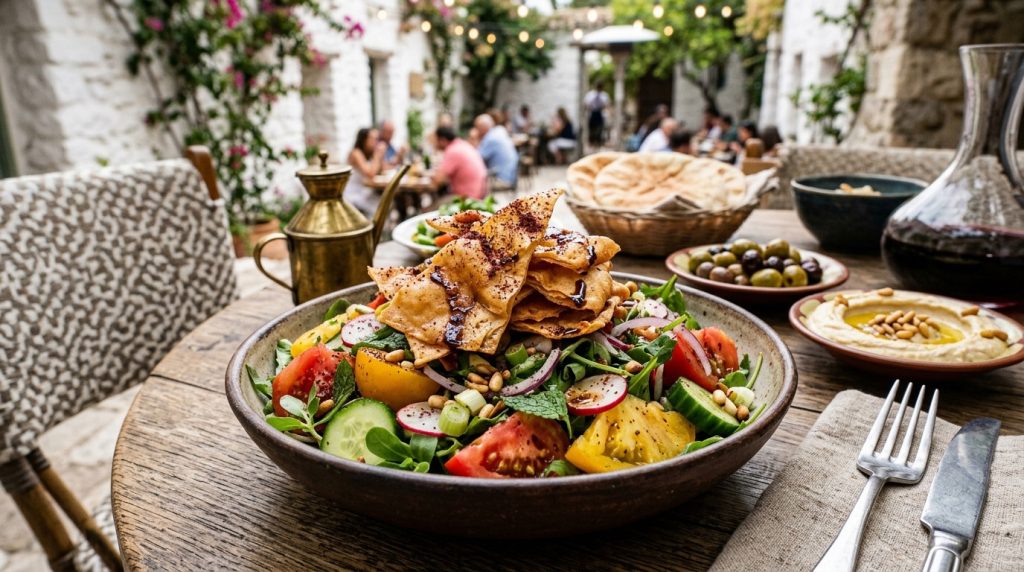
A proper Lebanese parsley salad uses a short list of ingredients:
- Fresh flat-leaf parsley
- Ripe tomato
- Fine bulgur
- Lemon juice and olive oil
- Mint and spring onion
- Salt
Each one has a job, and none of them overpowers the parsley. Tabbouleh is one of Maroush’s cold mezze dishes. It arrives chilled at the table before the grills.
Why Fresh Parsley Matters
Chopping technique makes a real difference. Coarsely cut parsley turns tough and loses the brightness this salad depends on. Chopped fine by hand, it releases its oils and keeps its colour under the dressing.
Freshness shows in colour and aroma as much as taste. A bowl made with care stays light on the fork.
Lemon and Olive Oil
The dressing is lemon and olive oil, and their balance decides how the salad tastes. Lemon brings the acidity that lifts the parsley. Olive oil softens that sharpness and carries the flavour through the bowl.
Lemon makes the herbs sharp and oil makes the plate heavy.
How Authentic Tabbouleh Differs
Many versions served in the UK lean heavily on bulgur. They are closer to grain salads with a few herbs stirred through for colour. The authentic recipe puts parsley first and keeps bulgur in support. It tastes brighter and lighter, and the difference is clear once you try it.
Wondering how fattoush compares with tabbouleh? Take a closer look at these two beloved Lebanese salads.
Tabbouleh in Lebanese Dining
Tabbouleh is made for a shared table. In a mezze spread, it cuts through richer dishes such as hommos and moutabal. That freshness helps over a long meal where the dishes keep coming. Our Lebanese mezze guide covers the full spread.
Taste Authentic Lebanese Tabbouleh
Maroush has six restaurants across London. The original flagship on Edgware Road still hosts live music and belly dancing on some evenings. Every kitchen prepares its mezze fresh each day. Every dish is halal, and every table is set for sharing.
Many guests tell us the mezze is what brings them back. Read a few reviews before your first visit. Then browse the full menu and find your nearest restaurant to taste tabbouleh the way it has always been made.