

There is something quietly magical about the moment Lebanese mezze arrives at the table. Plate after plate appears vivid greens, creamy whites, glistening golds and suddenly the conversation slows, hands reach, and the meal becomes something more. It becomes a gathering.
What Is Mezze?
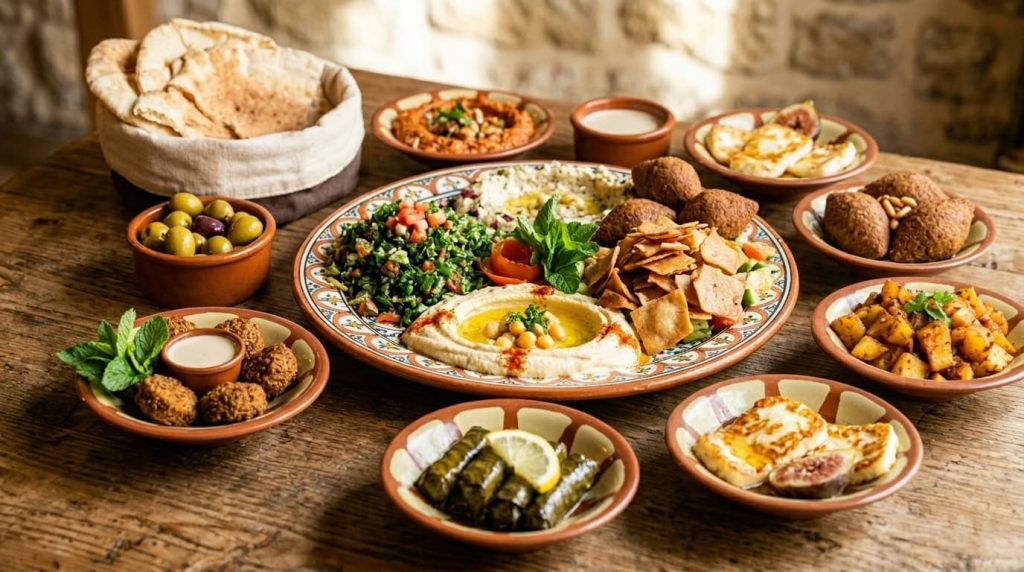
Mezze (sometimes spelled meze) is the Lebanese and wider Middle Eastern tradition of sharing many small dishes together at the start of a meal. Think of it less as a starter and more as a philosophy: food is better when it is shared, and a table covered in colourful plates is a table full of joy.
A Lebanese mezze spread typically includes anywhere from six to twenty dishes, enjoyed slowly, with warm flatbread to scoop, dip, and wrap. Some are cold and refreshing; others arrive sizzling hot from the kitchen. Together, they create a balance of flavours, textures, and temperatures that is endlessly satisfying.
Cold Mezze: The Classics
Cold mezze dishes are the heart of any Lebanese spread. Made fresh each morning in our kitchens, these are the dishes that regulars request the moment they sit down.
- Hummus Silky, slow-cooked chickpeas blended with tahini, lemon, and garlic. Simple ingredients, extraordinary results. Ours is made daily, and you will taste the difference.
- Tabbouleh Perhaps the most iconic Lebanese salad: finely chopped flat-leaf parsley, tomato, spring onion, a whisper of bulgur wheat, and a generous squeeze of lemon. Bright, herby, and irresistible.
- Fattoush A rustic salad of seasonal vegetables and toasted flatbread, dressed with pomegranate molasses and sumac. Every bite has crunch, colour, and a gentle tang.
- Moutabal Chargrilled aubergine blended with tahini and lemon until it becomes something smoky, creamy, and deeply satisfying. Often compared to baba ganoush, though many of our guests tell us there is simply no comparison, moutabal is in a class of its own.
What makes cold mezze so special is the freshness. Every element matters the quality of the olive oil, the ripeness of the tomatoes, the balance of lemon. At Maroush, we have never taken shortcuts with these classics.
Hot Mezze: Warm and Fried Dishes
Hot mezze brings a different kind of pleasure: that first bite of something golden and crisp, fragrant with spice, pulled straight from the kitchen.
- Kibbeh One of Lebanon’s most beloved dishes. Minced lamb and bulgur wheat are shaped into oval croquettes, filled with spiced meat and pine nuts, then fried until perfectly golden. The crust crackles; the inside melts. A true Lebanese mezze experience is incomplete without kibbeh.
- Sambousek Crispy half-moon pastries filled with either spiced lamb or tangy cheese. One of those dishes that disappears from the plate before anyone has quite noticed.
- Grilled Halloumi Thick slices of halloumi, pan-griddled until the outside caramelises and the inside stays soft and squeaky. It arrives at the table still warm, and it is never on the plate for long.
- Falafel Our hand-rolled falafel are made from soaked chickpeas blended with herbs and spices, then fried to a deep, herbaceous green inside and a satisfying crunch outside.
- Fried Calamari Lightly battered rings of squid, served with garlic dip. Delicate, fresh, and always popular.
Mezze dishes arrive in waves, and that is part of the joy the table stays lively, the conversation keeps flowing, and there is always something new to try.
The Art of Ordering Mezze for a Group
Ordering mezze well is a gentle skill, and one we are always happy to help with. Here is how we think about it:
- Balance cold and hot. Aim for roughly equal numbers of each the freshness of cold dishes beautifully offsets the richness of hot ones.
- Think in textures. Creamy hummus and moutabal pair wonderfully with something crunchy like fattoush or falafel.
- Order one round, then another. Mezze is not meant to all arrive at once. Order a first wave, enjoy it, and add more as you go.
- Bread is not optional. Fresh Lebanese flatbread is how you truly eat mezze use it to scoop, wrap, and savour every last drop.
- Go one dish per person, plus a couple extra. A good rule for groups: count your guests, order that many mezze dishes, and add two or three more for good measure.
Not sure where to start? Our front-of-house team at every Maroush restaurant is there to guide you just ask for their favourites of the evening.
Mezze at Maroush
We started serving Lebanese mezze London had never quite tasted before back in 1981, when Marouf Abouzaki opened the first Maroush on Edgware Road. The vision was simple: to bring the warmth, generosity, and authenticity of Beirut’s finest dining to London.
Today, Maroush has restaurants across London, from our beloved Edgware Road flagship (where live music and belly dancing make evenings truly unforgettable) to Beauchamp Place, Earls Court, High Street Kensington, Kings Road, Park Royal, and Maroush at Crockers Folly. Each one serves the same authentic mezze spread, made with the same love.
Planning an event? Our Lebanese catering service brings the full Maroush mezze experience to your home, office, or venue, from intimate dinners to large celebrations.
Order or Book Now
You are warmly welcome to book a table at any of our London restaurants, where our team will guide you through a mezze spread tailored to your group, whether you are celebrating, catching up, or simply treating yourself to something extraordinary.
If you would rather enjoy Maroush at home, we also offer takeaway and delivery. And for larger gatherings, our catering team would love to hear from you.
Frequently Asked Questions About Lebanese Mezze
What is the difference between cold mezze and hot mezze? Cold mezze dishes such as hummus, tabbouleh, and moutabal are prepared in advance and served at room temperature or chilled. Hot mezze dishes, such as kibbeh, sambousek, and grilled halloumi, are cooked to order and arrive warm from the kitchen.
How many mezze dishes should I order for a group? A good rule of thumb is one mezze dish per person, plus two or three extras for sharing. For a group of four, we might suggest six to eight dishes, a mix of cold and hot with plenty of fresh flatbread.
Is Lebanese mezze suitable for vegetarians? Absolutely. Many classic Lebanese mezze dishes are naturally vegetarian or vegan, including hummus, tabbouleh, fattoush, moutabal, falafel, warak enab, and ful medames. It is one of the most naturally plant-friendly cuisines in the world.
What is the difference between moutabal and baba ganoush? Both dishes use chargrilled aubergine as their base, but moutabal is blended with tahini and lemon for a richer, creamier texture. Baba ganoush is typically mixed with tomatoes, onions, and herbs instead.
Can I order Lebanese mezze for a private event or catering? Yes, Maroush offers a full Lebanese catering service for private dinners, weddings, corporate events, and more. Our team can create a bespoke mezze spread for any occasion. Visit our catering page for more details.