

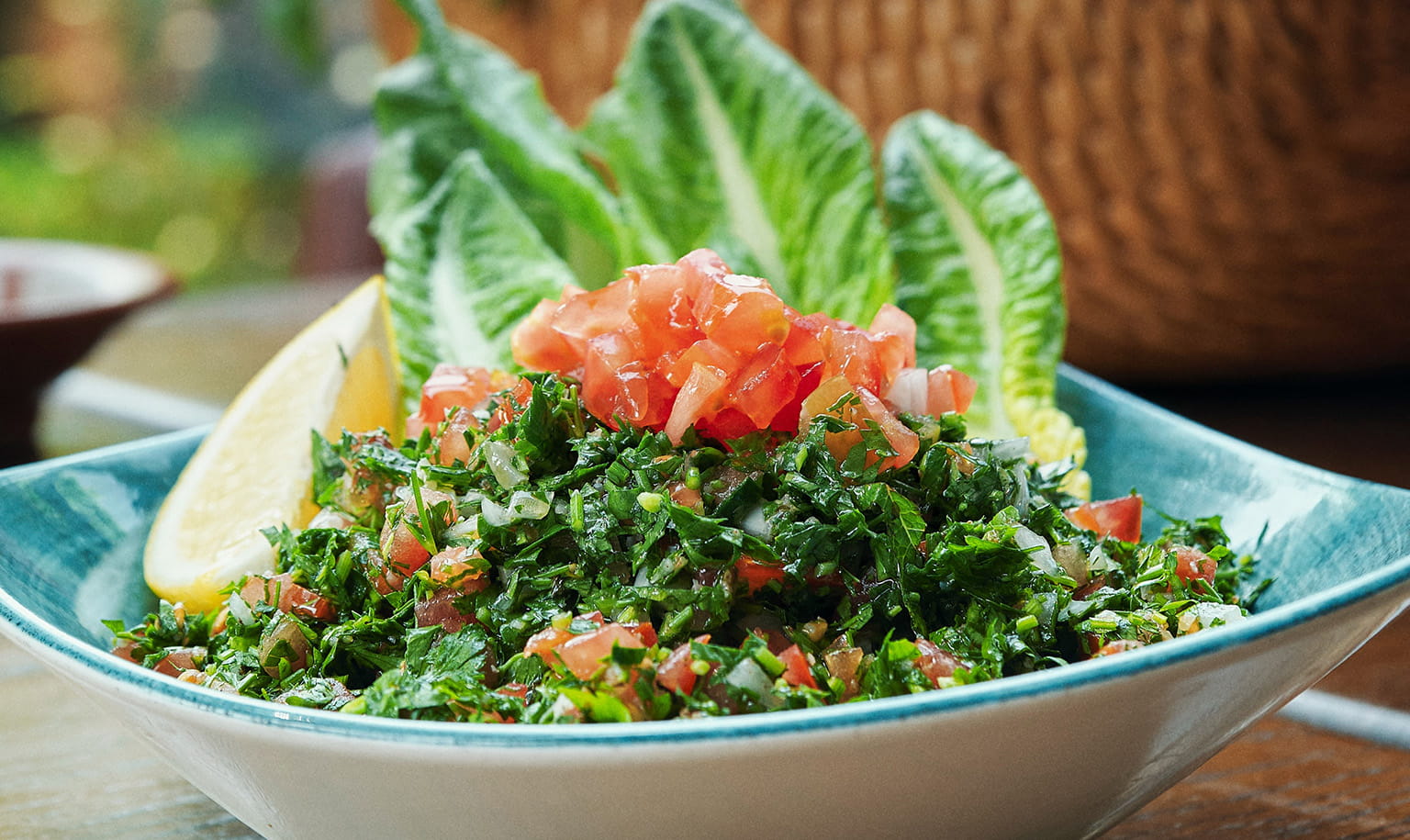
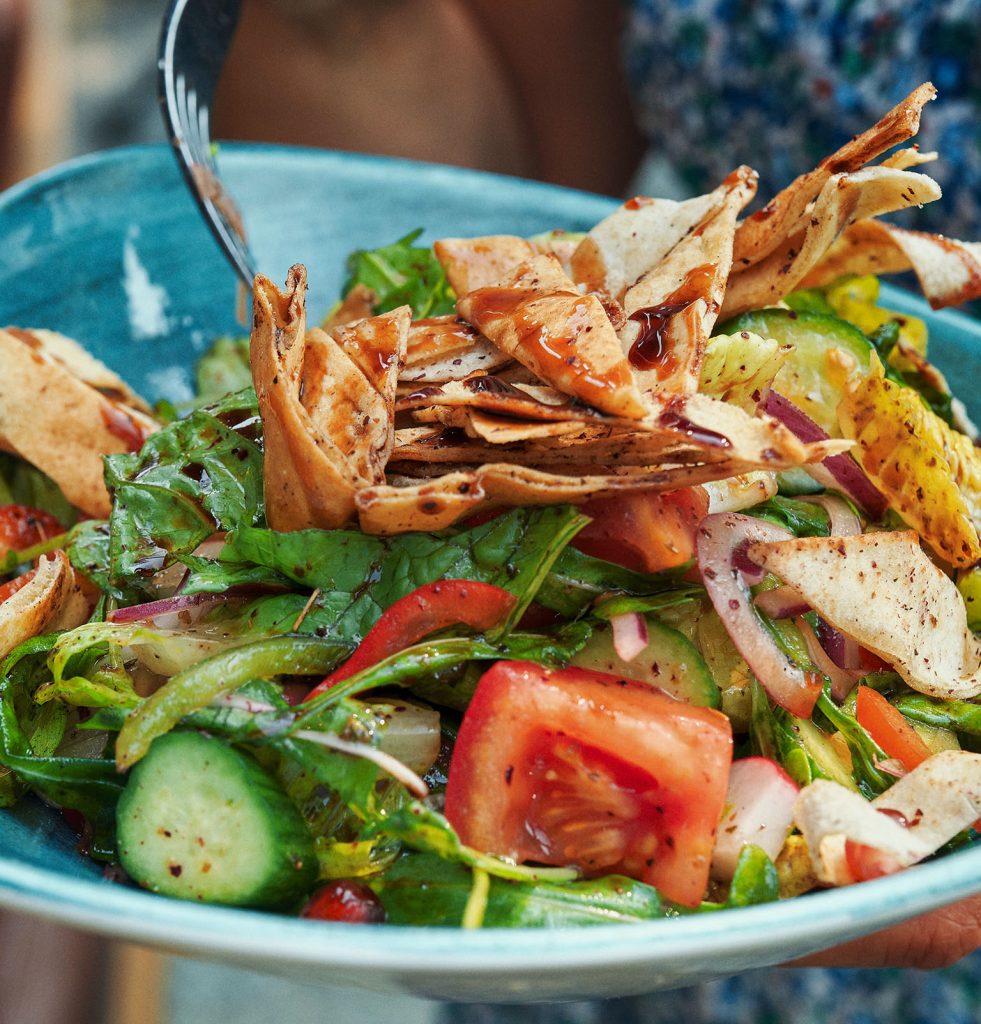
Two bowls on the table. One glows green. The other is a bright tumble of vegetables with shards of crisp bread scattered over the top. Anyone hunting for a proper fattoush salad London can trust usually looks at both and asks the same thing.
Each has been made fresh in our kitchens every day since the first Maroush on Edgware Road. Consider this a short Lebanese salad guide from the family who has been serving them for more than forty years.
What is fattoush
Flatbread was toasted or fried, then broken over whatever the garden and the market had given up that week.
Ours arrives as a mixed salad with crisp bread, sumac, and pomegranate. Lettuce, tomato, cucumber, radish, onion, and peppers are cut into generous pieces. The bread goes on last, so it still snaps when your fork reaches it.
What is tabbouleh
Tabbouleh works the other way round. Parsley is the main ingredient here, not a garnish. Finely chopped flat-leaf parsley meets tomato, mint, a modest amount of bulgur, lemon and good olive oil.
The balance surprises first-timers. Many arrive expecting a grain salad with herbs stirred through it. Lebanese tabbouleh is a herb salad with just enough grain for texture. Tip that ratio too far and it stops tasting like home.
The key differences
Lebanese salads explained in one glance:
- Texture: fattoush is crunchy and loose. Tabbouleh is fine and soft.
- The star: bread and vegetables against parsley and mint.
- The sour note: sumac and pomegranate molasses against pure lemon.
- The knife work: rough chunks against a very fine chop.
- How to eat it: fattoush with a fork. Tabbouleh scooped up with warm bread.
Which goes best with your meal?
Ordering from the charcoal grill? Tabbouleh is your friend. Its lemon cuts through smoke and richness and resets the palate between bites of kofta or shish taouk.
Building a mezze spread instead? Fattoush holds its own beside hommos, moutabal and labneh, and the crisp bread gives the whole table some crunch. Our cold mezze guide explains how those plates work together.
Vegetarian and vegan guests rarely have to compromise, since both salads are plant-based by nature. Our kitchens are halal throughout, so everything beside them stays open to the whole table. You will find both on our menus.
The spice behind salad
Sumac is a dark red berry, dried and ground to a coarse powder. It brings a clean sour brightness with a fruity edge that lemon alone cannot reach.
A sumac salad tastes tart in a rounder way. There is no vinegary bite, just a lift that keeps you reaching for another forkful. Sumac seasons our fattoush and our Maroush salad, and it turns up again across the plates in our Lebanese mezze guide.
Try both at Maroush
Salads are where that freshness shows first. Herbs are washed and chopped daily. Bread is crisped to order.
Order one of each, pull them into the middle of the table, and let everyone reach. Book a table at one of our London restaurants. The bread will be warm when you arrive.