

When people ask us what makes Lebanese food so special, health is rarely the first word that springs to mind. They think of the warmth. The mezze spreading across the table. The laughter and the shared plates. But here’s the thing: what’s good for the soul in Lebanese cuisine also happens to be extraordinarily good for the body.
Healthy Lebanese food is not a trend or a modern rebrand. It’s simply the way our cuisine has always been made: built on fresh vegetables, fragrant herbs, quality olive oil, and honest cooking techniques passed down through generations. As the family behind Maroush since 1981, we’ve always known it. Now, the rest of the world is catching up.
The Mediterranean–Lebanese Food Connection
Lebanon sits at the very heart of the Mediterranean, and its food reflects that geography in every bite.
The Mediterranean diet celebrated by nutritionists and researchers worldwide as one of the most beneficial eating patterns for long-term health shares its DNA almost entirely with traditional Lebanese cooking. Abundant vegetables, legumes, wholegrains, good fats, moderate lean proteins, and virtually nothing processed or artificial.
Lebanese cuisine nutrition is, in many ways, the Mediterranean diet in its most authentic, joyful form. Not a clinical meal plan, but a living, breathing food culture that has nourished families for thousands of years. See the full allergen and calorie information for more details.
Plant-Based Dishes at the Heart of the Menu
Long before “plant-based” became a hashtag, Lebanese families were gathering around tables laden with dishes that happened to be entirely plant-forward.
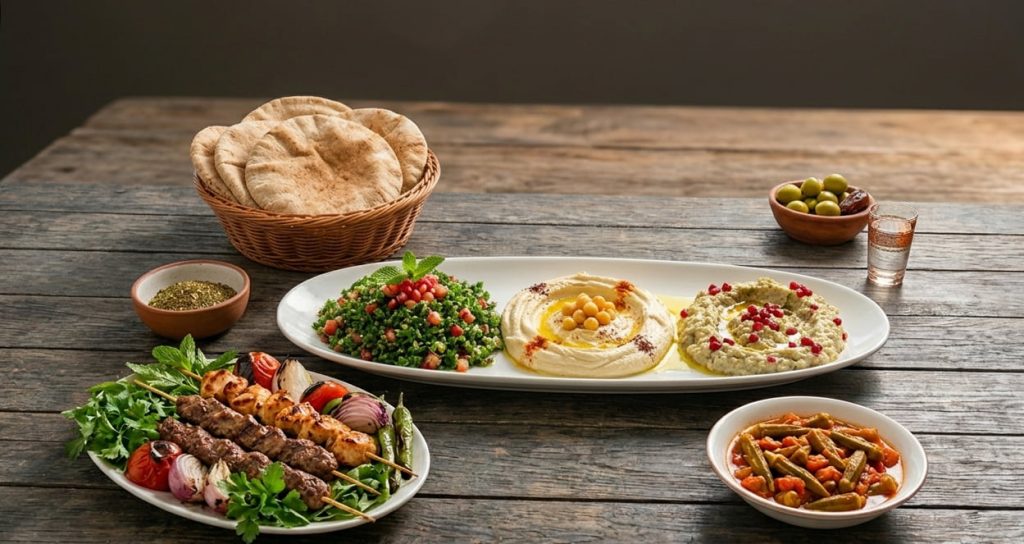
Think about what’s at the core of any Lebanese spread:
- Hummus: creamy, protein-rich chickpeas blended with tahini and lemon
- Tabbouleh: a herb-forward salad where parsley is the star, not a garnish
- Fattoush: seasonal vegetables brightened with sumac and toasted bread
- Falafel: golden, crisp, and made purely from ground chickpeas and fresh herbs
- Moutabal: smoky roasted aubergine with tahini, earthy and deeply satisfying
These plant-based Lebanese dishes aren’t side notes. They’re the soul of the meal. Many of our guests tell us they come in for the grills and leave having fallen in love with the mezze all over again.
The Role of Olive Oil
Olive oil is not an ingredient in Lebanese food. It is an identity.
From the drizzle over a bowl of hummus to the generous glug in a fattoush dressing, quality extra-virgin olive oil runs through everything we prepare. Rich in monounsaturated fats and polyphenols, it’s long been associated with heart health and anti-inflammatory benefits, something Lebanese grandmothers understood long before it appeared on any health chart.
Fresh Herbs as Medicine
Imagine the scent that greets you when a plate of tabbouleh arrives at your table, that vivid, almost electric freshness of flat-leaf parsley, mint, and lemon. It’s not just beautiful. It’s nourishing in the most direct way possible.
Lebanese cuisine leans heavily on herbs that have been used in the region as natural remedies for centuries:
- Parsley: rich in vitamin K and antioxidants
- Mint: soothing and bright, used in salads, drinks, and marinades
- Za’atar: a wild thyme blend with remarkable depth, eaten with olive oil and bread
- Coriander and cumin: warming spices that thread through our stews and grills
When we prepare our mezze fresh every single day as we have done since Marouf Abouzaki opened the doors on Edgware Road these herbs arrive at the table at their most vibrant and alive.
Lean Proteins from the Grill
Lebanese cooking has always known how to treat meat with respect, which often means using less of it, and making it count.
Our charcoal grills produce some of the most flavourful, honest food in London: chicken shish marinated in lemon and garlic, kofta seasoned with aromatic spices, whole sea bass grilled simply and served with fresh herbs. Lean, high-quality proteins, free from heavy sauces or unnecessary fats.
The Lebanese diet health benefits extend to how we cook as much as what we cook. Grilling over charcoal, marinating in citrus, finishing with fresh herbs, these are techniques that enhance nutrition.
Eat Well at Maroush
There’s a reason Maroush has been London’s original Lebanese restaurant for more than four decades. It was never about convenience food or shortcuts. It was and still is about feeding people properly.
Whether you’re sitting down at one of ourrestaurants on Edgware Road, exploring our full menus of mezze, grills, and vegetarian dishes, or planning a gathering through ourcatering service, you’ll find that healthy Lebanese food and genuine pleasure are never in conflict. Here, they’re the same thing.
Come and see for yourself. Pull up a chair, pour a glass of mint lemonade, and let the mezze begin.