

Labneh sits on nearly every Lebanese table. It is strained yogurt that has been drained until it spreads like soft cheese. Many people call it Lebanese cream cheese for that reason. The tang gives it away. Families eat it for breakfast and serve it with mezze.
What is labneh?
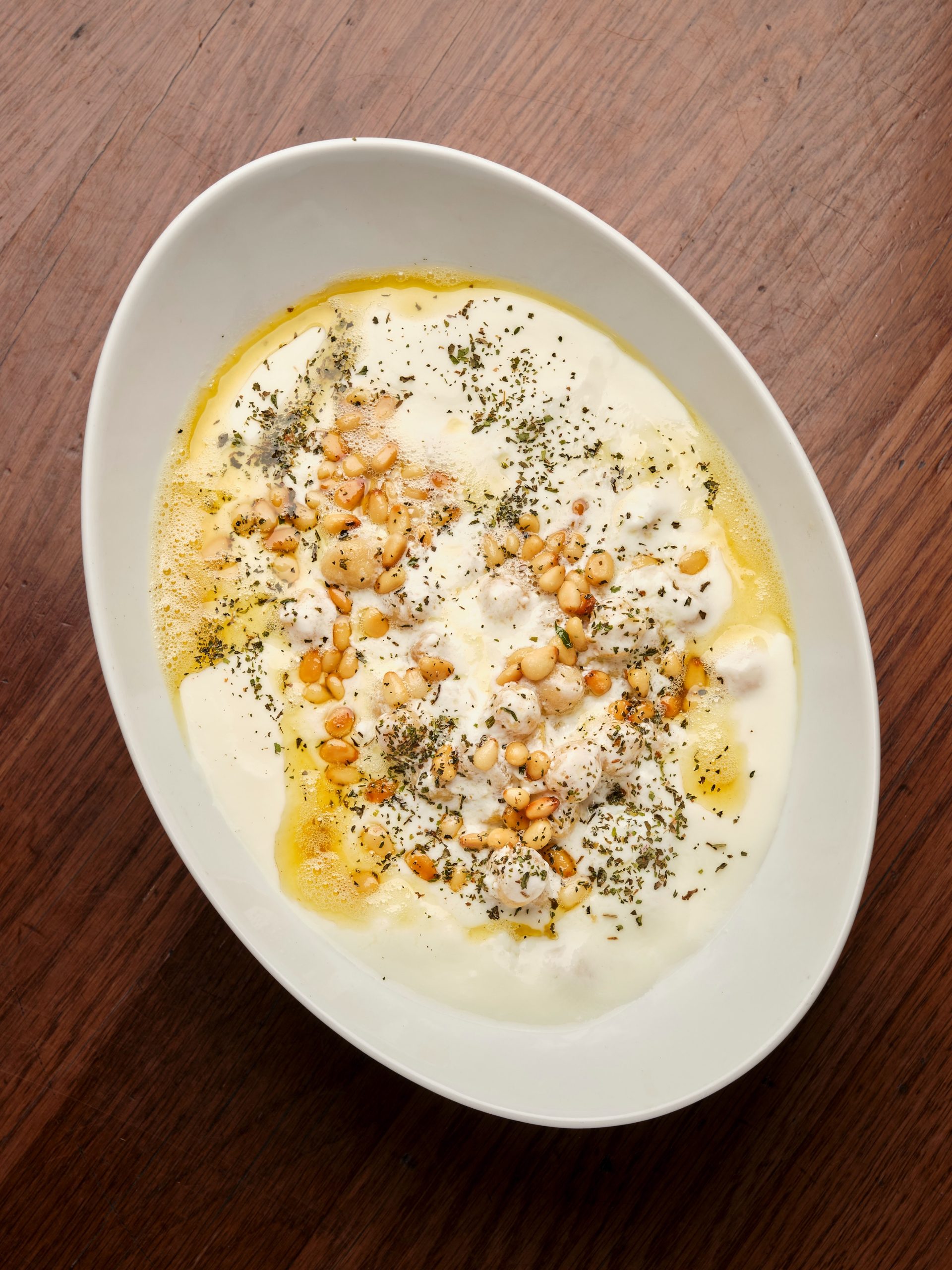
Labneh is yogurt with the whey strained out. The texture sits between yogurt and cream cheese, and the flavour is fresh and sharp. Good Lebanese labneh keeps the mark of a spoon.
Straining yogurt is a long Levantine habit. It makes fresh milk last longer. Lebanese cooks use the result as a dip and a spread and a sauce for grilled meat. If you’d like to see what else sits beside it on the table our Lebanese mezze guide goes through the full spread.
How labneh is made
Lebanese strained yogurt takes almost no effort. Salt the yogurt and put it in a cloth. Hang the cloth or set it in a sieve over a bowl. Walk away. The whey drips out over twelve to twenty-four hours. Stop at twelve and you have a soft spread. A full day gives something firm enough to roll.
Full-fat yogurt makes the creamiest labneh. Low-fat versions come out thinner. The salt adds flavour and draws out more whey. Most of the taste comes from the yogurt so choose one you enjoy.
Labneh at breakfast
Breakfast in Lebanon is a spread of small plates and labneh tends to land on the table first. Swirl it across a plate and add olive oil. Warm bread is torn and dragged through it. Olives and sliced cucumber and tomato go on the same plate with a few mint leaves.
It also goes into flatbread with cucumber and mint for a breakfast to take with you. Other mornings it is spread thick on toast.
Labneh in the mezze spread
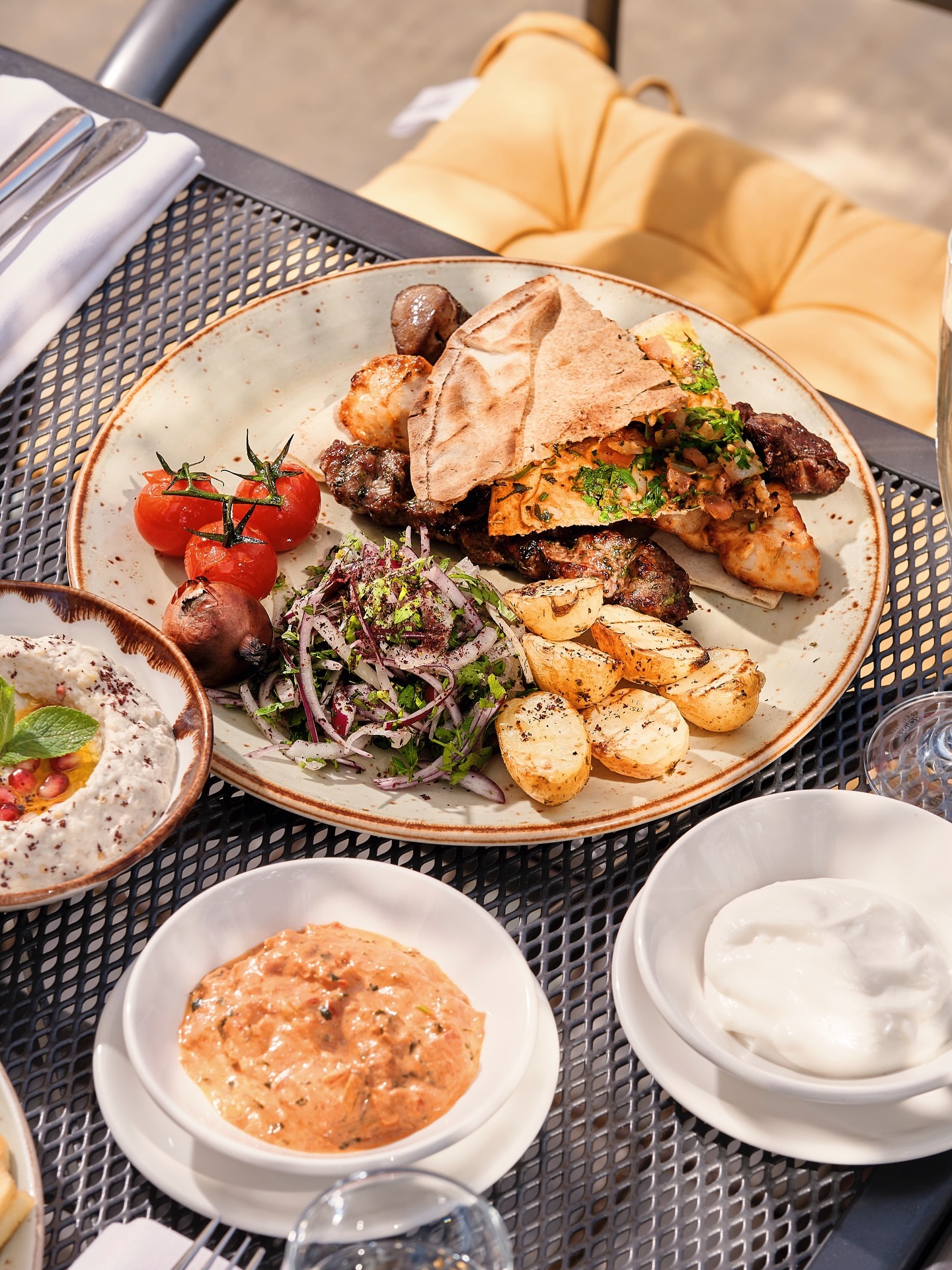
On a mezze table labneh is the cool creamy plate. Next to smoky moutabal and sharp tabbouleh and garlicky hommos it gives your palate somewhere to rest.
Labneh is part of our daily mezze tradition at Maroush. Ours comes drizzled with extra virgin olive oil and finished with dried mint and Lebanese bread arrives alongside for scooping. Planning a bigger table? Our cold mezze vs hot mezze post sorts out what to order first.
Outside the mezze plate you’ll find it in sandwiches and next to grilled chicken and stirred into dressings. The tang cuts through rich food.
Spread the labneh on a plate and press a shallow well into the middle with the back of a spoon. Olive oil goes into the well and za’atar goes over the top.
Make it at home
Homemade labneh takes five minutes of work and a night in the fridge. You need very little equipment.
A simple labneh recipe
- 500g full-fat plain yogurt
- ½ teaspoon fine salt
- Good olive oil to serve
- Muslin or a clean tea towel and a sieve
Stir the salt through the yogurt first. Line a sieve with muslin and set it over a bowl and spoon the yogurt in. Fold the cloth over the top and put the whole thing in the fridge.
Try it at Maroush
Making labneh at home is a pleasure. Eating it at a table full of friends is better still. Labneh sits on our menu with the rest of the cold mezze.
The Edgware Road restaurant still has live music and belly dancing on some evenings. Come with family or friends and share a spread. Vegetarians can build a full meal from the mezze alone. Book a table and order labneh early with a second basket of bread.