

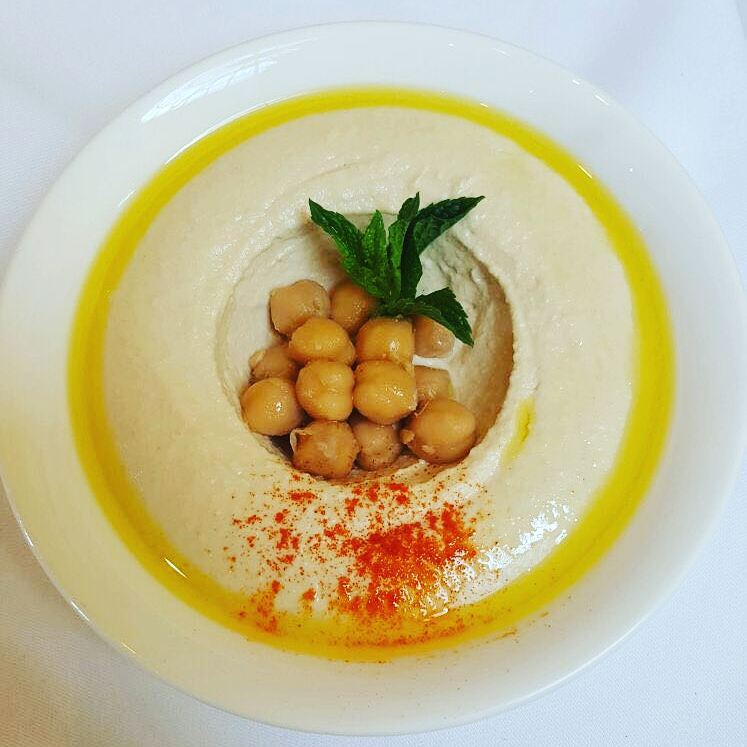
The hummus is made daily using quality chickpeas, tahini, lemon juice and olive oil. This simple approach creates a smooth texture and rich flavour.
The hummus in London
London is full of hummus. Supermarket shelves heave with tubs promising “extra creamy” this and “roasted red pepper” that. Corner shops stock basic versions that taste more of the fridge than of chickpeas. The result is that many Londoners have never actually tasted real hummus the kind with character, warmth, and a whisper of garlic.
Good hummus should be the star of the table, something you tear fresh bread through with abandon, competing for the last swirl of olive oil.
What hummus requires
Hummus asks for very little, but it asks for the best of those few things. There’s nowhere to hide; every ingredient speaks.
- Dried chickpeas
- The finest tahini
- Fresh lemon juice
- Proper garlic
- Ice-cold water
When those five elements are treated with patience and respect, magic happens. It’s what we’d call an authentic hummus recipe, because it’s been passed through generations of Lebanese cooks who knew that simplicity is the hardest thing to master.
The key ingredients explained
We could talk about chickpeas and tahini all day, so let’s linger on them for a moment.
Chickpeas
We use large, creamy chickpeas. We cook them until they’re so tender you could mash them with a whisper.
Tahini
If you’ve only ever stirred a stiff, dark layer back into a jar, you’ve missed the joy of truly great tahini. Proper hummus with tahini requires a light, ivory paste made from top-quality sesame seeds. It pours like honey and tastes like toasted nuts.
The extra touches
A glug of golden olive oil pooled in the centre. A scattering of whole chickpeas. A dust of sumac or paprika, perhaps, for colour.
Why freshness matters
Hummus has a secret: it doesn’t age gracefully. Within hours, even the most exquisite hummus from scratch starts to lose its spark. The lemon dulls, the garlic turns sharp.
That’s why we make ours fresh every single morning and often again in the afternoon. Walk into any Maroush kitchen, and you’ll see chickpeas bubbling away, the whirl of the food processor, a cook drizzling tahini by eye. By evening, that same hummus is being carried to tables on Edgware Road.
It’s the simplest thing, but it changes everything. When hummus is this fresh; you taste the care, the warmth, the tradition.
How Maroush makes hummus
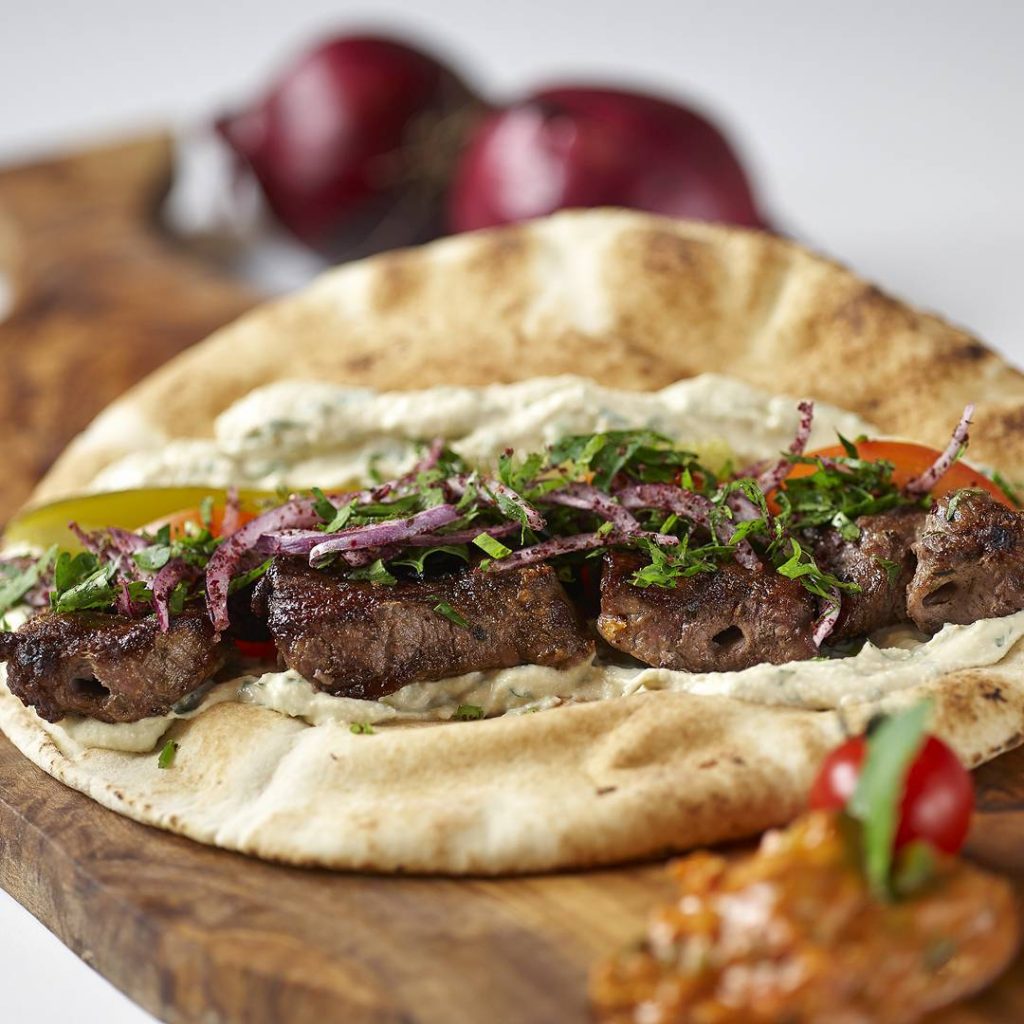
Since the day Marouf opened our first doors, the hummus recipe has been a daily ritual. The chickpeas are soaked overnight, boiled to silky tenderness, then blitzed while still warm with tahini, lemon, garlic, and salt.
The chefs know the recipe by heart, by feel, by the way the mixture hums against the blade. Whether you’re spooning it up at our flagship with live music floating through the dining room, or ordering Lebanese hummus London takeaway to your door, the standard never shifts.
Come and taste the difference
Words are lovely, but hummus is meant to be eaten. We’d love you to pull up a chair at one of our London restaurants, perhaps on the original Edgware Road, where the ovens bake flatbreads all night, and the aroma of grilled halloumi drifts onto the pavement.
Bring the family. Come with friends. Browse our menus to see all the dishes that have made Maroush the original taste of Beirut in London. Once you’ve tasted hummus made this way truly fresh, deeply authentic, and full of heart you’ll never look at a supermarket pot the same way again.