

There is a moment, just after you sit down at Maroush, when a basket of warm Lebanese bread arrives at your table. It lands quietly, almost humbly, and yet it changes everything. The air fills with that particular, impossible-to-fake scent of freshly baked khobez, and suddenly you know: this is the real thing. This is Lebanese bread in London done the way it has always been done.
Bread in Lebanese culture is not a side dish. It is not a formality. It is the beginning of every conversation, the vessel for every flavour, and in our eyes at Maroush, the very first signal of a great Lebanese restaurant. We have been baking and serving it this way since 1981, and we would not have it any other way.
Bread as Hospitality
In Lebanon, offering bread to a guest is an act of welcome as old as the mountains themselves. The word ‘khobez’ simply means bread, but what it carries is so much more generosity, warmth, the unspoken promise that you are among friends now.
When Marouf Abouzaki opened the doors of the first Maroush on Edgware Road in 1981, he brought this philosophy with him from Beirut. The family table, spread with sharing plates, laughter, and bread broken together that was the vision. More than four decades on, it remains the beating heart of everything we do.
What Is Khobez?
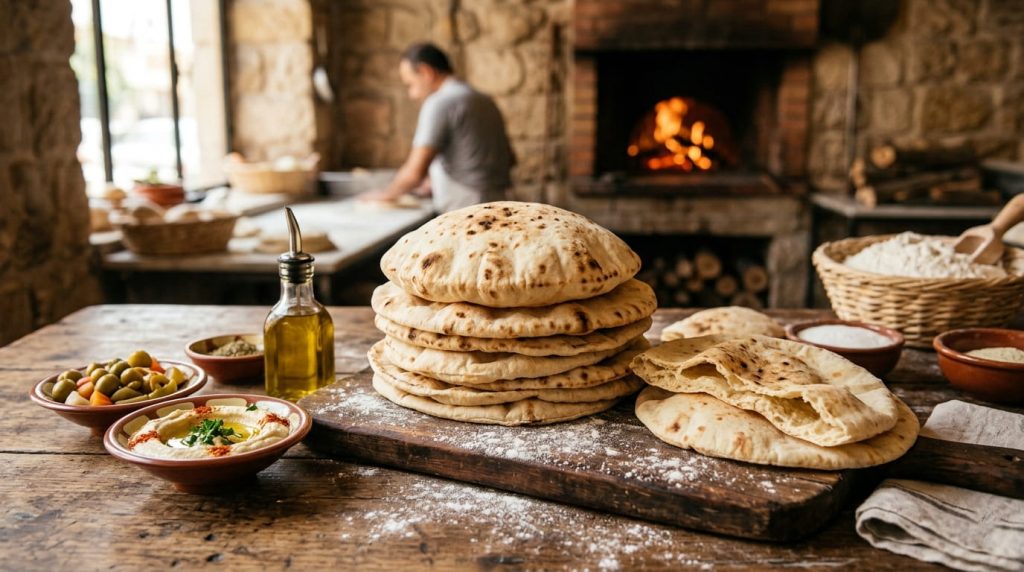
Khobez is a round, leavened Lebanese flatbread baked at high heat until it puffs into a hollow pocket, light, pillowy, and faintly charred at the edges in the most beautiful way. You may know a version of it as ‘pita bread’, but authentic Lebanese khobez has its own character entirely: thinner, softer, and far more alive.
The dough is simple flour, water, yeast, and a touch of salt, but the technique and the temperature are everything. Baked correctly, khobez emerges with that signature hollow centre, perfect for tearing, scooping, and wrapping. It is the edible spoon of the Levant.
Good khobez should be:
- Soft and pliable, not brittle or dry
- Lightly golden with small char spots from the heat
- Fresh, ideally still warm when it reaches your hands
- Hollow enough to hold generous fillings
The Role of Bread in Lebanese Dining
In Lebanon, you do not really eat a meal; you share one. And bread is the instrument that makes sharing possible. It arrives first. It stays throughout. It is the connective tissue of the whole experience.
At a traditional Lebanese table, bread is used to scoop hummus from the centre of the bowl, to cradle a mouthful of fattoush, to wrap around slow-grilled shish taouk before it even reaches the plate. It is never decorative. It is always essential.
Bread and Mezze
Imagine the scene: plates begin to arrive, creamy hummus drizzled with olive oil, a bowl of smoky moutabbal (aubergine dip), fresh tabbouleh bright with parsley and lemon, and a small pot of warm, spiced ful medames. Now imagine trying to eat any of it without bread.
Our mezze menus at Maroush are built around this sharing philosophy. Every dip, salad, and small plate is designed to be enjoyed together, passed hand to hand, bread tearing and plates emptying as the conversation flows.
The Different Lebanese Flatbreads
While khobez is the everyday staple, Lebanese cuisine has a wonderful variety of flatbreads, each with its own occasion and character. A few worth knowing:
- Khobez (everyday pita-style): the round, pocketed classic you will find on every Maroush table
- Marquq (mountain bread): a paper-thin, almost translucent sheet bread from the Lebanese highlands, used to wrap mixed grill platters and slow-roasted meats
- Kaak: a sesame-crusted ring bread sold by street vendors in Beirut, often eaten with za’atar and olive oil
- Man’oushe flatbread: baked to order and spread with za’atar paste and olive oil, this is Beirut’s beloved breakfast bread
Each of these tells a different story about the region and the people who made it. Authentic Lebanese flatbread is never mass-produced, never an afterthought; it is crafted with intention and eaten with joy.
Fresh Bread at Maroush
As the family behind Maroush since 1981, we have always believed that fresh bread is non-negotiable. It is one of the first things guests notice, and as many of our long-time regulars will tell you, it is one of the things they miss most when they have been away.
Whether you are visiting for a long, leisurely mezze spread, a lively dinner with the whole family, or a quiet lunch for two, we invite you to explore our restaurants and menus and discover what Lebanese bread in London is really meant to taste like.
Frequently Asked Questions
What is the difference between Lebanese bread and regular pita bread?
Authentic Lebanese khobez tends to be thinner, softer, and more delicate than the commercially produced pita bread you might find in a supermarket. It is baked at much higher temperatures, giving it a lighter texture and that characteristic slight char.
Is Lebanese flatbread suitable for vegetarians and vegans?
Yes, traditional khobez is made from flour, water, yeast, and salt, making it naturally vegan and vegetarian. At Maroush, our bread accompanies a wide range of plant-based mezze dishes, from classic hummus and moutabbal to fattoush and falafel, making for a wonderfully satisfying meat-free meal.
Where can I find authentic Lebanese bread in London?
Maroush has been serving authentic Lebanese bread in London since 1981. Our flagship restaurant on Edgware Road, as well as our other London locations, serve fresh khobez as part of every dining experience.
How should I eat Lebanese bread with mezze?
The Lebanese way is refreshingly simple: tear, scoop, wrap, repeat. Use a torn piece of khobez to scoop dips like hummus and moutabbal, or fold it around grilled meats and salad from the mezze spread. There are no rules beyond generosity.
Does Maroush cater for large groups and events with Lebanese food?
Absolutely. Sharing is at the core of Lebanese hospitality, which makes our food a natural fit for group dining, celebrations, and events. Maroush offers catering and private dining options.